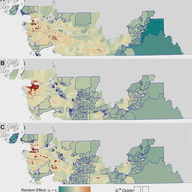
Evaluating regional variation in neighbourhood socioeconomic inequalities in motor vehicle injury collisions
Socioeconomic deprivation is associated with higher injury crash incidence across all 16 urban regions of British Columbia, but the strength of the relationship varies regionally, ranging from a 17% increase per standard deviation of deprivation in Vancouver-Fraser Valley to 51% in the Okanagan.
Dec 12, 2025
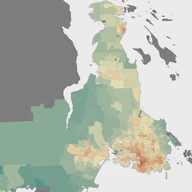
Spatial Analysis of Social Inequalities in Road Traffic Injury
This ongoing project maps how social inequalities shape the risk of road traffic injuries across neighborhoods in British Columbia. By combining census data, crash records, and spatial modeling, it highlights patterns of deprivation and injury risk—especially for pedestrians and cyclists—to inform safer and more equitable urban planning.
Sep 1, 2025
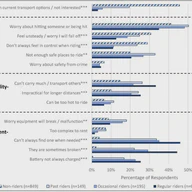
To scoot or not to scoot: Findings from a recent survey about the benefits and barriers of using E-scooters for riders and non-rider
E-scooters used more for transport than recreation, potentially filling a niche. Also viewed as convenient, faster, and better in hot weather than walking. Non-white non-riders significantly more likely to intend to try e-scooters. E-scooters disproportionately replace walking and bicycling for all trip types. Women significantly more likely to cite safety-related barriers to e-scooter use.
Sep 20, 2020
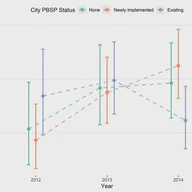
Impact of Public Bicycle Share Programs on Bicycling Collisions
This project evaluated how implementing public bicycle share programs (PBSPs) affected the likelihood of bicycling collisions across multiple North American cities. Using a difference-in-differences approach applied to repeated cross-sectional survey data, it shows that crash odds did not increase after PBSP implementation and were notably lower in cities with existing programs, supporting the safety of well-established bike share systems.
Sep 2, 2020