Area-based measures of socioeconomic status in studies assessing health outcomes among people living with HIV in Canada and the USA: a scoping review
A scoping review of 56 studies from Canada and the USA finds that area-based measures of socioeconomic status are widely used but inconsistently defined in HIV research, with most studies linking lower area-based SES to poorer health outcomes among people living with HIV.
Jun 4, 2026
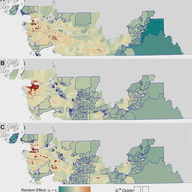
Evaluating regional variation in neighbourhood socioeconomic inequalities in motor vehicle injury collisions
Socioeconomic deprivation is associated with higher injury crash incidence across all 16 urban regions of British Columbia, but the strength of the relationship varies regionally, ranging from a 17% increase per standard deviation of deprivation in Vancouver-Fraser Valley to 51% in the Okanagan.
Dec 12, 2025
Measuring inequities in transportation injuries in a Canadian commuter cohort: impacts of individual versus neighbourhood income
In a cohort of ~6.6 million Canadian commuters, low-income individuals faced higher transportation injury risk regardless of where they lived, with the largest inequities in pedestrian injury occurring in the highest-income neighbourhoods.
Oct 1, 2025
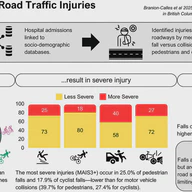
Comparing pedestrian and cyclist injuries from falls and collisions in British Columbia, Canada: Frequencies and population characteristics
Pedestrian and cyclist falls cause more hospital admissions than collisions with motor vehicles in British Columbia, with falls accounting for 68.8% of pedestrian and 48.6% of cyclist admissions compared to 29.2% and 27.6% for vehicle collisions respectively.
Apr 2, 2025
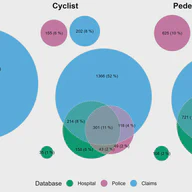
Underreporting and selection bias of serious road traffic injuries in auto insurance claims and police reports in British Columbia, Canada
We found gaps in how motor-vehicle traffic injuries are captured across British Columbia's administrative datasets, with insurance claims recording the highest percentage of injuries (95.7% for drivers, 83.3% for cyclists, 76.5% for pedestrians), yet substantial proportions of hospitalized individuals missing from both insurance and police records, particularly among vulnerable road users and low-income populations—potentially perpetuating inequities when these incomplete datasets inform safety investment priorities.
Mar 6, 2025

Ascertainment and description of pedestrian and bicycling injuries and fatalities in Ontario from administrative health records 2003–2017: contributions of non-collision falls and crashes
Jul 11, 2024
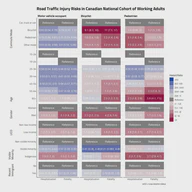
Risk Factors and Inequities in Transportation Injury and Mortality in the Canadian Census Health and Environment Cohorts (CanCHECs)
We observed significant inequities in transportation injury risk requiring hospitalization, with higher incidence rates among low-income and Indigenous populations for injuries involving motor vehicle occupants, pedestrians, and cyclists.
Mar 1, 2024
Crowdsourced bicycling crashes and near misses: trends in Canadian cities
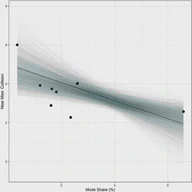
Crowdsource bicycling incident reports across 9 Canadian cities suggest dangerous passes are the most commonly reported bicycling incidents, with the highest ratio of near misses to collisions (9:1) while incident types leading to highest proportion of injury were with motor vehicles turning left.
Aug 13, 2021
Estimating walking and bicycling in Canada and their road collision fatality risks: The need for a national household travel survey
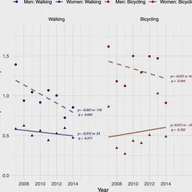
Canadian Community Health Survey captures more bicycling/walking than the census. Across data sources, walking more common among women than men. Men had higher risk of a fatality than women for bicycling and walking. Both data sources have key limitations for measuring bicycling and walking. Implementing a national household travel survey should be a priority in Canada.
Jun 1, 2021
Translating risk to preventable burden by estimating numbers of bicycling injuries preventable by separated infrastructure on a Toronto, Ontario corridor
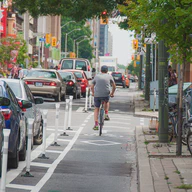
We estimated installation of fully separated cycle tracks along one Toronto corridor would prevent approximately 152.9 injuries and 0.9 fatalities over a 10-year period.
May 26, 2021